UK Gambling Scene Heats Up: Key Trends and Headlines Reshaping Casinos
Ben Frank · Apr 10, 2026

UK Gambling Commission Rolls Out New MSB Notification Rules for Casinos: Swift Reporting Now Mandatory
The Latest Update from the Gambling Commission
Casinos in the UK that dip into money service businesses (MSBs) like third-party cheque cashing, fund transfers, or foreign currency exchange now face a clear directive from the UK Gambling Commission; they must notify the regulator within just 10 days of either launching or shutting down such services, a move that sharpens compliance tracking across the sector. This updated notice spells out exactly what operators need to do, ensuring swift communication through a dedicated email channel, and it ties directly into broader financial regulations that keep operations above board.
Details pour in via msb@gamblingcommission.gov.uk, where casinos submit their full name, licence number, precise dates when MSB activities kick off or wind down, plus a breakdown of the service types involved; it's straightforward yet comprehensive, designed to give the Commission real-time visibility into these ancillary operations. And for those casinos handling MSBs under The Payment Services Regulations 2017, authorisation or registration with the Financial Conduct Authority stands as non-negotiable, layering financial oversight onto gambling licences in a way that prevents gaps.
What's interesting here lies in the timing; while the notice dropped recently, casinos already offering these services scramble to align, and those eyeing expansions into MSBs come April 2026 will bake this 10-day rule into their planning from day one, avoiding any slip-ups amid ongoing sector audits.
Breaking Down Money Service Businesses in Casinos
MSBs crop up in casinos as handy extras—think a punter cashing a cheque at the cage, wiring winnings abroad, or swapping pounds for euros before heading home—yet these activities pull operators into a web of financial scrutiny that goes beyond gaming floors. The Gambling Commission's update zeroes in on third-party cheque cashing, electronic transfers, and currency exchanges specifically, services that while convenient, demand tight regulatory eyes to curb risks like money laundering or unlicensed financial dealings.
Take one land-based casino in London that recently added a foreign exchange desk; under the new rules, its management fires off an email within 10 days, listing the licence number (say, something like 12345-001234), start date such as 15 March 2025, and service type as "foreign currency exchange," all while confirming FCA status if payments regs apply. Observers note how this mirrors patterns in other regulated sectors, where quick notifications prevent oversight black holes.
But here's the thing: not every casino touches MSBs, so only those with such offerings feel the pinch, yet the notice casts a wide net, prompting even non-MSB venues to double-check their ancillary services; it's not rocket science, but missing the email could trigger compliance flags down the line.
Step-by-Step: What Casinos Must Report and When
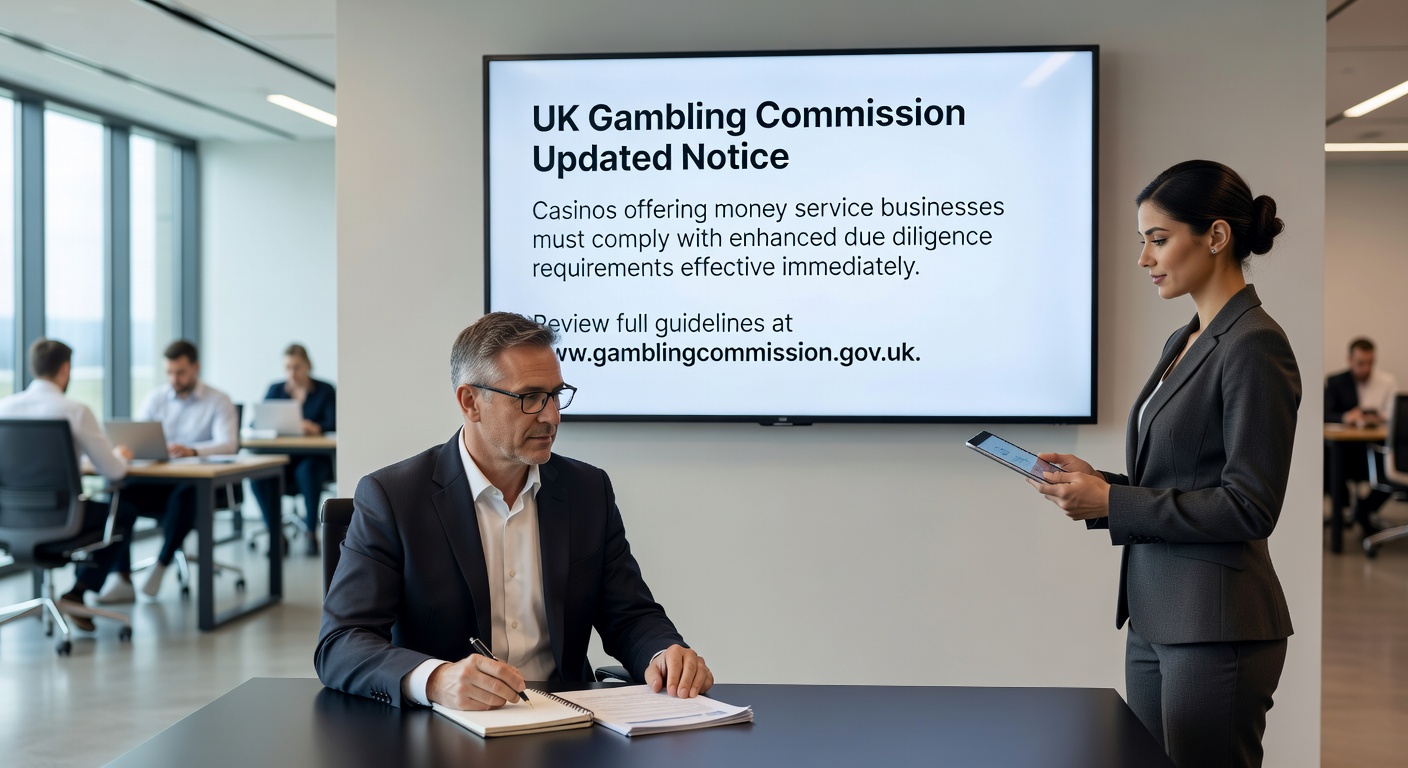
The process kicks off simple: spot an MSB starting or stopping, then hit that 10-day clock; operators grab their full legal name (e.g., "Premier Palace Casino Ltd"), plug in the Gambling Commission licence number pulled straight from their operating certificate, note exact dates—perhaps "commenced 1 April 2025, ceased 30 June 2026"—and specify services like "third-party cheque cashing" or "international fund transfers." Everything lands at msb@gamblingcommission.gov.uk, creating a centralized hub that experts have observed streamlines Commission monitoring without overhauling daily ops.
And if Payment Services Regulations come into play—which they do for many transfer or exchange setups—FCA authorisation becomes the gatekeeper; casinos without it face hurdles, as the Gambling Commission cross-checks to ensure no unlicensed financial plays slip through casino doors. People who've navigated similar regs point out that this dual oversight, blending gambling and finance rules, keeps the ecosystem robust, especially as player volumes swell post-pandemic.
Short and punchy: miss the deadline, risk enforcement. Longer view: submit promptly, stay compliant. That's the balance the notice strikes.
Why This Matters for Casino Operators and Regulators
Regulators like the Gambling Commission push these updates because MSBs, though peripheral to slots and tables, intersect with high-stakes finance; data from past audits reveals how unchecked services once fueled illicit flows, so this 10-day notify mandate plugs potential leaks before they widen. Casinos, meanwhile, gain clarity—no more guessing on reporting thresholds—allowing them to integrate emails into routine compliance checklists, much like quarterly financials or staff training logs.
Consider a regional operator in Manchester ceasing cheque cashing amid digital payment shifts; they email cessation details by day 10, freeing resources while signaling to the Commission that MSB exposure drops. Or picture a seaside venue in Blackpool launching transfers for international tourists; prompt notification, plus FCA nod under the 2017 regs, keeps everything kosher as summer crowds peak. These cases highlight how the rule adapts to real-world flux, from tech-driven pivots to seasonal surges.
Yet the email-only channel stands out—efficient, trackable, and low-friction—contrasting clunkier portal systems elsewhere; it's noteworthy that this choice speeds data flow, helping the Commission map MSB prevalence across licences nationwide.
Compliance Tips Straight from the Notice
Operators start by auditing current services: does the cage handle third-party cheques? Offer exchanges? Run transfers? If yes, check FCA status pronto, especially if regs apply, then set calendar reminders for that 10-day window on any changes. Templates emerge naturally—name, licence, dates, types—making submissions a breeze; those who've implemented similar protocols report it takes under 30 minutes per update.
And for April 2026 rollouts, say a casino pairs MSB launch with a floor expansion, they notify early, dovetailing with licence variations if needed; the Commission's guidance underscores accuracy over speed alone, so verifying details against records pays off. Semicolons link it all: precise emails foster trust, FCA alignment prevents dual-reg breaches, and timely reports keep ops smooth.
Now, training enters the chat—staff at front desks learn to flag MSB shifts to compliance teams, ensuring nothing falls through cracks amid busy nights. It's where the rubber meets the road for everyday enforcement.
Broader Ties to Financial Oversight in Gambling
This MSB notice doesn't float alone; it dovetails with the Gambling Commission's ongoing anti-money laundering (AML) framework, where MSBs rank high on watchlists because cash-heavy environments amplify risks. Figures from Commission reports indicate thousands of UK casino licences exist, but only a subset run MSBs, making targeted notifications efficient; experts who've studied sector data note how such rules evolve with threats, from crypto whispers to post-Brexit exchanges.
So a casino eyeing currency services for EU visitors post-2026 confirms FCA registration first, emails the Commission second, and logs it internally third—layered steps that observers describe as standard fare in regulated finance-gambling crossovers. Parenthetical aside: while digital wallets boom, physical MSBs persist in land-based spots, sustaining this rule's relevance.
Conclusion
The UK Gambling Commission's MSB notification update delivers a crisp, actionable framework—10 days to report via email, full details mandatory, FCA checks essential—empowering casinos to manage services compliantly while arming regulators with vital intel. As operators adapt, from immediate alignments to 2026 plans, this rule underscores the sector's commitment to transparent finance amid gaming's buzz. Casinos that embed it now sidestep pitfalls; the system's there, ready for use.