British Casinos Riding the Digital Wave: Fresh Buzz and Shifting Sands
Leon Fischer · Mar 31, 2026

UK Gambling Commission Rolls Out Updated Notice on Casinos' Money Service Business Activities
The Latest Update from the Regulator
On 26 March 2026, the UK Gambling Commission released an updated notice targeting UK casinos that offer money service business (MSB) activities, such as third-party cheque cashing or foreign currency exchange; this move requires operators to notify the Commission within ten days of either starting or stopping these services, ensuring tighter oversight amid ongoing compliance efforts. Casinos now face a clear directive to submit specific details—including their full name, licence number, the exact date of the change, and the type of MSB service involved—directly via email to msb@gamblingcommission.gov.uk, a process that builds directly on a prior notice issued just weeks earlier on 9 February 2026.
What's interesting here is how the update reinforces existing obligations while streamlining communication channels for operators; those who've followed regulatory shifts in the gambling sector know that such notifications help the UKGC maintain a comprehensive register of MSB providers within licensed venues, particularly since these activities intersect with broader anti-money laundering (AML) frameworks. Data from the Commission's AML notices underscores the importance of this tracking, as unregulated financial services in casinos could otherwise expose the industry to heightened risks.
Breaking Down Money Service Business Activities in Casinos
Money service businesses encompass a range of financial operations that casinos sometimes provide alongside gaming, like cashing cheques from third parties or exchanging foreign currencies right on the casino floor; operators engaging in these must now report changes promptly, since the UKGC views them as distinct from core gambling licence permissions. Take one scenario where a casino introduces currency exchange to cater to international visitors—that triggers the ten-day notification window, complete with all required details sent to the designated email.
And while the notice zeroes in on starting or ceasing services, it also serves as a reminder that these MSB activities fall squarely under The Payment Services Regulations 2017, meaning casinos can't just dive in without separate authorisation or registration from the Financial Conduct Authority (FCA); experts who've studied these intersections point out that dual oversight from UKGC and FCA prevents gaps in financial regulation, especially in environments handling large cash volumes. The reality is, non-compliance could lead to enforcement actions, although the notice focuses on proactive reporting rather than penalties at this stage.
Observers note how this update clarifies ambiguities from the February notice, which first flagged the need for notifications but lacked the precise email protocol; now, with msb@gamblingcommission.gov.uk as the go-to address, casinos gain a straightforward path forward, and that's where the rubber meets the road for operators juggling multiple regulatory hats.
Key Requirements and Submission Process
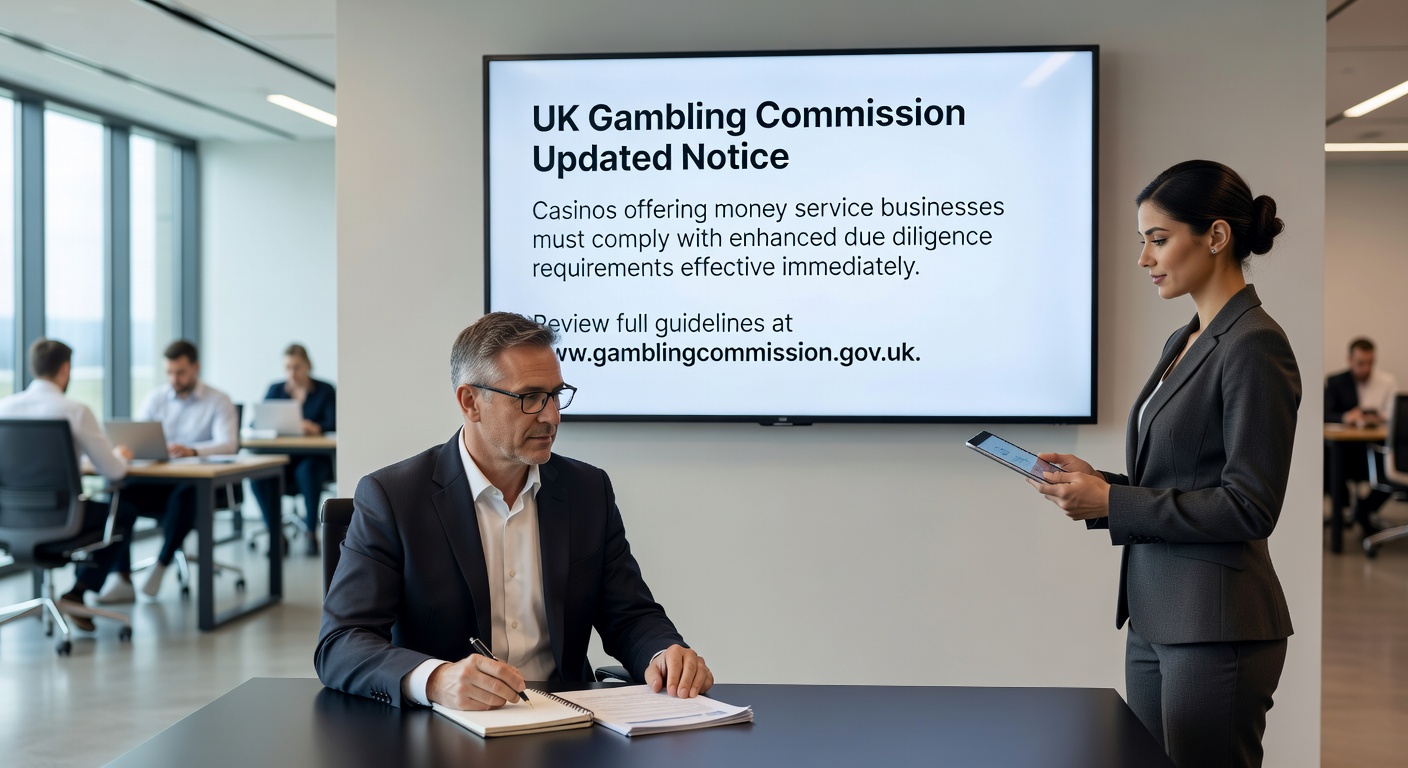
Casinos must include four core pieces of information in their notifications: the full legal name of teh business, the specific UKGC licence number, the date when the MSB service begins or ends, and a clear description of the service type—whether it's third-party cheque cashing, foreign exchange, or similar; sending this to msb@gamblingcommission.gov.uk within ten days keeps everything above board, and failure to do so might invite scrutiny down the line. But here's the thing: this isn't a one-off; the update builds a continuous monitoring system, allowing the UKGC to track MSB prevalence across the casino landscape in real time.
People familiar with the sector often discover that smaller or regional casinos, which might offer these services seasonally to boost convenience, benefit most from such clear guidelines; one case from regulatory archives shows how prompt notifications helped operators align with FCA requirements seamlessly, avoiding the pitfalls of overlapping rules. Turns out, the Payment Services Regulations 2017 demand that anyone providing payment services—including MSBs—registers as either an authorised payment institution or a small payment institution with the FCA, a step that casinos can't overlook if they're handling client funds in this capacity.
So, for a casino deciding to wind down cheque cashing operations amid shifting customer preferences, the clock starts ticking on the decision date; ten days later, the email flies off with all details attached, closing the loop efficiently while the UKGC updates its records accordingly.
Context Within Broader Regulatory Landscape
This March 2026 notice emerges against a backdrop of heightened focus on financial integrity in gambling, where MSB activities have long operated in the shadows of main floor gaming; the UKGC's prior February directive laid the groundwork by alerting casinos to their reporting duties, but the update sharpens the tools with a dedicated email and reiterated FCA ties. Researchers examining AML compliance data indicate that casinos providing MSBs represent a small but significant subset of operators, often in high-traffic urban venues where international play drives demand for currency services.
It's noteworthy that The Payment Services Regulations 2017, enacted post-Brexit to mirror EU standards, classify cheque cashing and forex as regulated payment services; without FCA nod, casinos risk operating illegally on that front, even if their gambling licence remains pristine. And while the UKGC doesn't directly authorise MSBs—that's the FCA's domain—it now mandates visibility into who offers them, creating a layered defence against illicit finance flows.
Those who've tracked these evolutions point to a pattern: regulators like the UKGC refine notices iteratively, responding to industry feedback or emerging risks; the ten-day window strikes a balance between urgency and practicality, ensuring casinos report without overwhelming administrative burdens. Now, with the email protocol locked in, compliance becomes less of a guessing game and more of a checklist item for licence holders.
Yet, for casinos already FCA-registered, this just means an extra ping to the UKGC; newcomers to MSB space, however, navigate a two-step process—FCA first for legitimacy, then UKGC for notification—highlighting how interconnected the ecosystems have become.
Implications for Casino Operators and the Industry
Operators reading the updated notice find a roadmap to staying compliant, especially since MSB services, while ancillary, carry outsized regulatory weight; data from similar past directives reveals that clear communication reduces inadvertent breaches, with notified casinos demonstrating stronger overall AML postures. Here's where it gets interesting: casinos pausing services—perhaps due to digital payment surges—still owe that ten-day heads-up, preventing outdated records from muddling UKGC oversight.
Experts observe that this push aligns with wider efforts to ringfence gambling from unregulated finance, a trend accelerating since 2020's AML reforms; one study on casino financial services found that transparent MSB tracking correlates with fewer suspicious activity reports filed with authorities. So, as March 2026 unfolds, casinos recalibrate operations accordingly, emailing details as changes occur and double-checking FCA status to cover all bases.
The writing's on the wall for non-reporters: visibility breeds accountability, and with msb@gamblingcommission.gov.uk now centralised, the UKGC gains sharper insights into this niche but critical area.
Conclusion
The UK Gambling Commission's 26 March 2026 updated notice on casinos providing money service business activities delivers precise, actionable guidance that operators can't ignore; by mandating ten-day notifications via a dedicated email, complete with name, licence number, date, and service details, it fortifies the bridge between gambling regulation and financial oversight under The Payment Services Regulations 2017. Building on the February precursor, this step ensures casinos offering third-party cheque cashing or foreign currency exchange stay aligned with both UKGC and FCA expectations, ultimately safeguarding the sector's integrity amid evolving compliance demands.
And as the industry adapts—some ramping up services for tourist seasons, others streamlining to digital alternatives—the notice stands as a pivotal marker, promoting transparency where cash and chips long mingled freely.