Britain's Betting Buzz: Fresh Faces, Big Bets, and Bold Changes in Casino Trends
Jonas Schmitt · Apr 2, 2026

UK Gambling Commission Refreshes Notice: Casinos Face 10-Day Deadline for Money Service Business Updates
The UK Gambling Commission has rolled out an updated notice targeting casinos that dip into money service businesses, or MSBs, like third-party cheque cashing, transfers, or foreign currency exchange; operators now face a clear reminder to notify the regulator within ten days of launching or halting these services, a move that underscores ongoing efforts to track such activities amid tighter financial oversight.
Unpacking the MSB Landscape in UK Casinos
Casinos often extend beyond gaming floors by offering MSBs, services that handle cash in ways separate from bets or winnings; third-party cheque cashing lets patrons convert cheques to cash quickly, while transfers move funds between accounts, and foreign exchange swaps currencies for international visitors, all of which can draw heavy traffic in high-stakes environments. What's interesting is how these offerings tie into the broader casino ecosystem, where convenience drives footfall, yet regulators keep a close eye since MSBs intersect with anti-money laundering rules. The Gambling Commission's updated notice zeroes in on casinos licensed under its purview, ensuring everyone stays aligned with reporting protocols that have evolved over time.
Take one operator in London that introduced forex services last year; it navigated similar notifications before, but this refresh clarifies timelines and details, preventing oversights that could snag compliance. Observers note these services aren't new—casinos have provided them for years to cater to high rollers and tourists—yet the reminder lands at a time when financial scrutiny ramps up across sectors.
The Core of the Update: That 10-Day Notification Window
At the heart of the notice sits a straightforward rule: casinos must ping the Commission within ten days of starting or stopping any MSB, whether it's cheque cashing for quick liquidity or transfers for seamless payouts; missing this window risks enforcement actions down the line, as the regulator uses these reports to map out MSB prevalence in the industry. And it's not just a casual heads-up—operators submit via email to msb@gamblingcommission.gov.uk, packing in specifics like the casino's full legal name, licence number, exact start or stop dates, and the precise type of service involved.
Here's where it gets interesting: the update builds on prior guidance but sharpens the process, making it easier for casinos to comply while giving the Commission real-time visibility; one venue halting transfers mid-quarter, for instance, reports the cessation date promptly, allowing regulators to adjust their oversight accordingly. Data from past filings shows dozens of such notifications annually, though exact figures remain tucked in Commission records, highlighting how routine this has become for larger operators.
But the ball's in the casinos' court now, especially as April 2026 rolls around with no grace periods mentioned; those who've studied the landscape point out that delays in reporting could complicate audits, since the Commission cross-checks against licence conditions tied to financial integrity.
Step-by-Step: What Casinos Need to Submit and Why
Compliance boils down to a precise email format, starting with the casino's full name—think "XYZ Casino Ltd.," not shorthand—followed by the Gambling Commission licence number, which operators pull from their operating certificate; next come the dates in clear DD/MM/YYYY style, whether marking a service launch on, say, 15 April 2026, or a wind-down by 30 June, and finally, the MSB category spelled out, like "third-party cheque cashing" or "foreign currency exchange via partner." Semicolons separate these in the notice's example, ensuring no ambiguity creeps in during processing.
Experts who've pored over similar regs emphasize accuracy here, since the Commission funnels this intel into its monitoring systems; one case from a Midlands casino revealed how a minor date mismatch delayed approval for a new service, underscoring that precision isn't optional. And while the email address stays constant at msb@gamblingcommission.gov.uk, casinos confirm receipt through follow-ups if needed, keeping the loop tight.
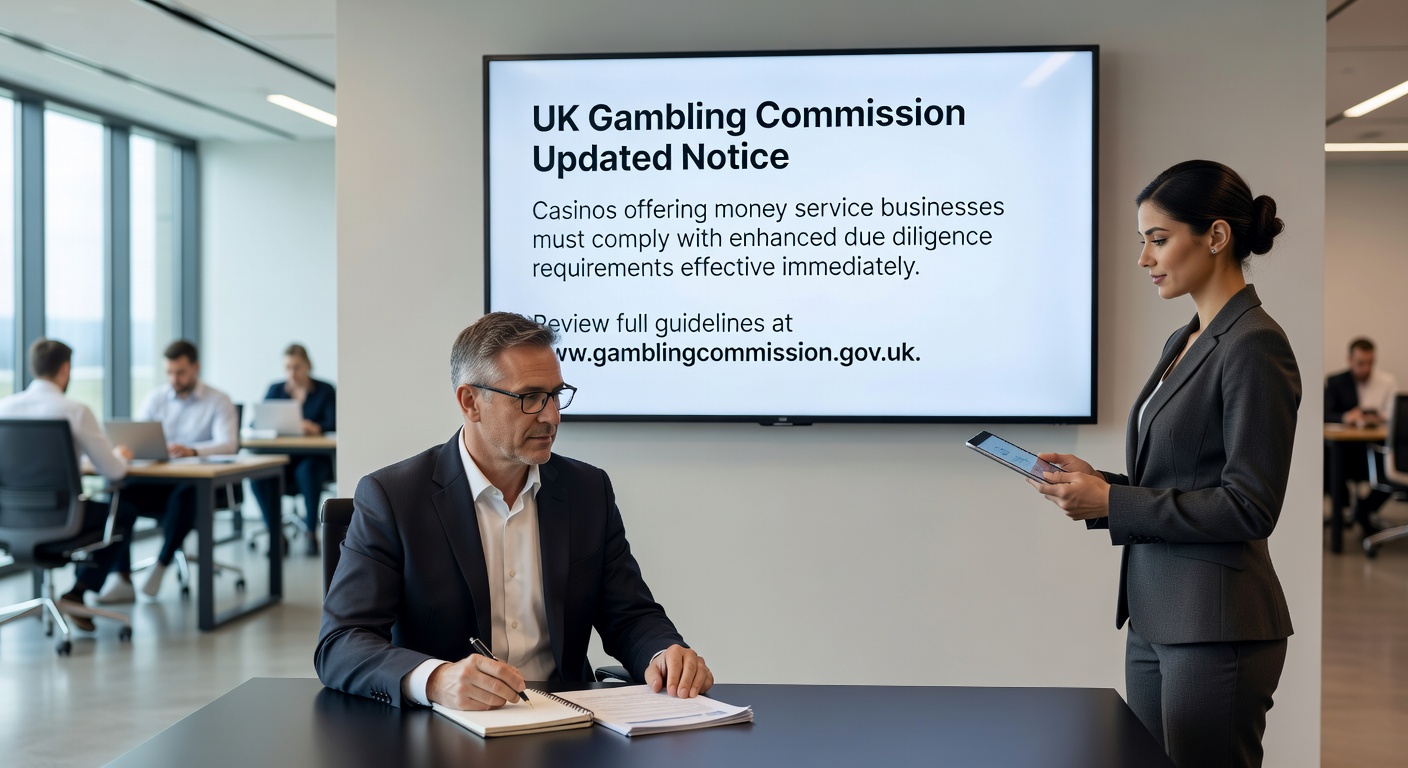
Layered Compliance: HMRC Registration and FCA Authorisation Essentials
Beyond the Commission's email, casinos tackle parallel requirements under HMRC and FCA umbrellas; MSBs trigger mandatory HMRC registration as money service providers, a step that flags operations for tax and AML tracking, while certain activities demand FCA authorisation if they veer into payment services or electronic money realms. The notice spells this out plainly: operators offering these must register with HMRC promptly and secure FCA nods where regs apply, weaving a compliance web that spans agencies.
Turns out, non-compliance here ripples fast; HMRC data indicates unregistered MSBs face penalties starting at £5,000, and FCA breaches can hit higher, with casinos often bundling these checks into their MSB rollout plans. People in the industry who've handled this recall how one coastal venue synced all three—Commission notice, HMRC form, FCA app—within weeks, avoiding snags during peak season. Although the Gambling Commission doesn't enforce HMRC or FCA rules directly, its notice reminds licensees to stay squared away, since lapses could jeopardize gaming licences overall.
That's the reality for casinos balancing gaming ops with financial sides; as April 2026 brings fresh quarterly reviews, those expanding MSBs—like adding transfer desks for overseas punters—factor in these layers early, ensuring smooth sails.
Context and Patterns: How MSBs Fit the Bigger Regulatory Picture
MSBs have dotted casino landscapes for decades, fueled by patrons needing instant cash without banking hours, yet post-2010s AML crackdowns sharpened focus; the Gambling Commission first flagged these in notices around 2018, evolving guidance as MSB volumes grew with international tourism. Figures from Commission reports reveal hundreds of licensed casinos, with a subset—perhaps 20-30% per industry estimates—running MSBs, though exact tallies shift yearly based on notifications.
Now, this update arrives amid broader shifts, like enhanced due diligence on high-value transactions; casinos log MSB volumes alongside gaming Gross Gambling Yield, feeding into tri-agency oversight that keeps laundering risks low. One researcher tracking casino finances noted how post-notification data helps spot trends, such as forex spikes during events like Cheltenham Festival, where punters swap euros for pounds en masse.
Yet smaller venues sometimes pause these services due to compliance heft, opting instead for partnerships; the notice accommodates starts and stops equally, reflecting that flexibility. And while no new penalties attach solely to the ten-day rule, tying it to licence conditions means operators prioritize it, especially with April 2026 audits looming on horizons.
Practical Impacts: What Operators and Watchers Are Seeing
Operators respond swiftly to such reminders; automated calendar alerts for the ten-day clock have become standard in compliance suites, while legal teams draft template emails for speed. Those who've navigated past versions appreciate the clarity—no more vague timelines—and training sessions now drill the details into staff, from floor managers spotting cheque volumes to execs signing off on FCA apps.
What's significant is the proactive tone; the Commission positions this as a partnership, urging notifications to "help us monitor," which fosters compliance over confrontation. In one instance, a northern casino stopped transfers after a partner audit flagged issues, notifying within days and pivoting to in-house cash desks compliant with HMRC. Such stories illustrate the notice's real-world groove, where ten days proves ample for most, barring unusual disruptions.
Regulators like the Commission track this to inform policy; aggregated data shapes future tweaks, ensuring MSBs enhance rather than undermine casino integrity.
Wrapping It Up: Staying Ahead in a Regulated World
The updated notice distills essentials into actionable steps, from that critical msb@gamblingcommission.gov.uk dispatch to HMRC and FCA alignments; casinos offering cheque cashing, transfers, or forex now recalibrate processes, notifying within ten days of any change to keep licences pristine. As April 2026 unfolds with its routine checks, compliance emerges as straightforward when tackled head-on—precise details, timely emails, layered regs observed.
Industry watchers see this as table stakes for legitimacy, with the Commission's nudge reinforcing a framework that balances service innovation against financial safeguards; operators who embed these rules thrive, turning potential hurdles into operational norms. In the end, clear notifications pave the way for unchecked growth in ancillary services, benefiting casinos, patrons, and overseers alike.